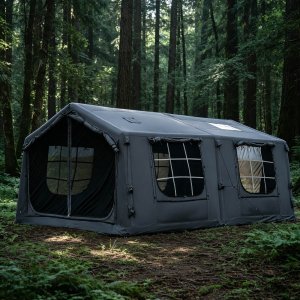








Inflatable Tent Interior Ideas: How to Create a Comfortable Camping Space
A spacious tent gives you more options, but it also creates a new question: what should you actually do with all that space?
When you first put up an inflatable tent, the empty interior can look huge. Then the mattresses come out, followed by sleeping bags, backpacks, shoes, clothes, cooking gear, and everything else packed into the car.
Before long, the floor can become surprisingly crowded.
The good news is that you don’t need a complicated interior design plan to make an inflatable tent comfortable. A few practical choices can make the space easier to live in while still leaving plenty of room to relax.
Start With Where You’ll Sleep
The sleeping area naturally becomes the most important part of the tent.
After spending the day hiking, exploring, or simply being outdoors, you want to come back to a bed that feels comfortable rather than treating sleep as an afterthought.
A good air mattress, comfortable bedding, and a proper pillow can make a noticeable difference.
If you’re camping as a couple, keep enough space around the bed to move easily at night. For families, separating the children’s sleeping area from the adults’ space can make bedtime much less chaotic.
If your inflatable tent has separate rooms, take advantage of them. A quieter room can be used for sleeping while the larger central area remains available during the day.
Don’t Let Your Bags Take Over
Camping gear has a habit of spreading.
One backpack becomes two. A jacket gets left on a chair. Shoes end up beside the bed. Before you know it, you’re searching through three different bags for a phone charger.
A simple storage area can prevent this.
Keep larger bags along one side of the tent and leave the center open. Clothing can stay together, while shoes and outdoor gear are best kept near the entrance.
For smaller items such as phones, glasses, books, and headlamps, lightweight organizers can be useful.
The goal isn’t to make everything look perfect.
It’s simply to know where your things are when you need them.
Give Yourself Somewhere to Sit
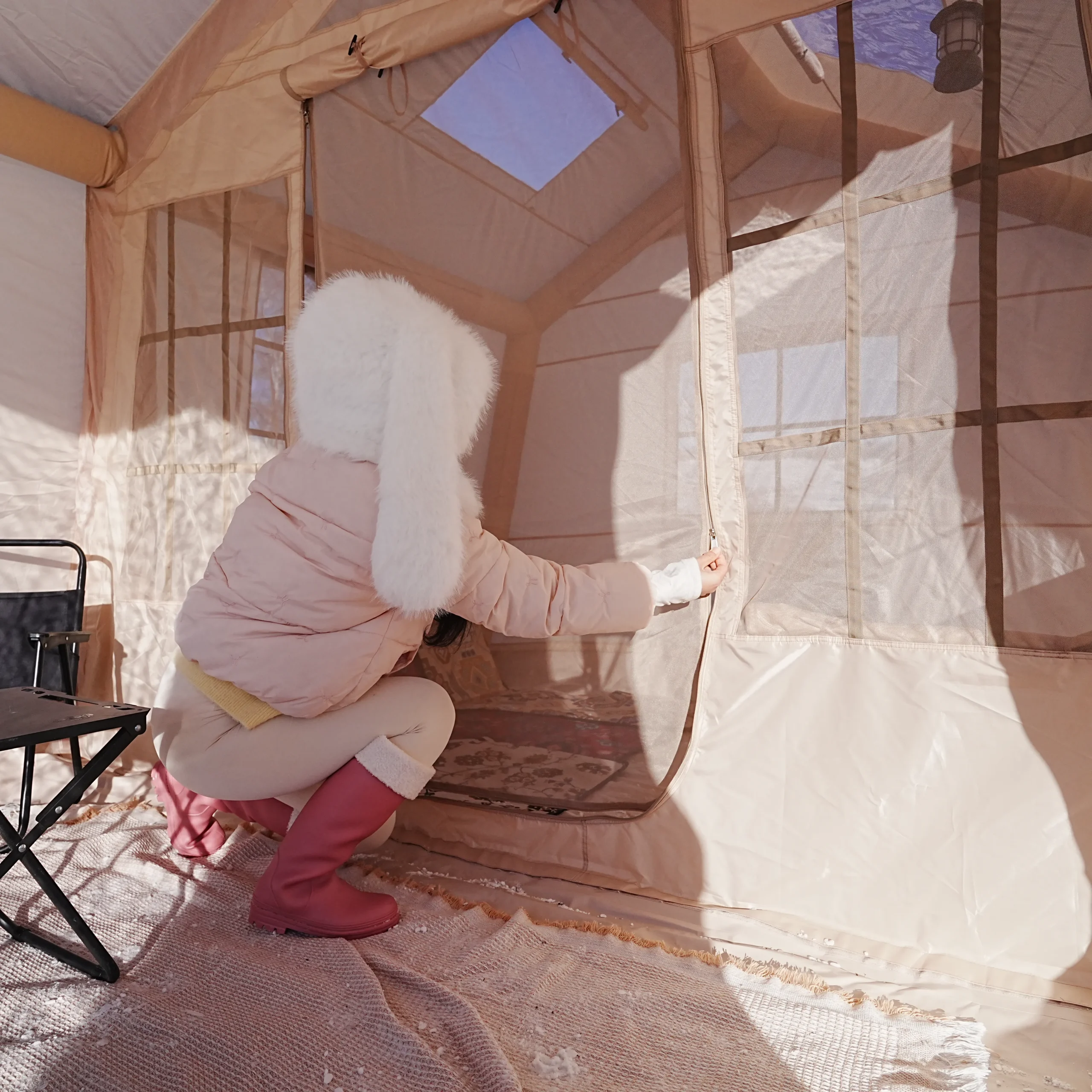
One of the best things about having a larger inflatable tent is being able to create a small living area.
A couple of lightweight camping chairs and a compact table can turn an otherwise empty section into somewhere you actually want to spend time.
You can have coffee there in the morning, read during the afternoon, or sit down with a board game when rain keeps everyone indoors.
This extra living space becomes particularly useful on longer camping trips.
Your tent stops being just a place to sleep and starts functioning more like a small outdoor home.
Keep Some Space Empty
It might seem strange to talk about leaving space empty when you’re trying to make the most of a tent.
But empty space is useful.
A clear floor makes it easier to move around, change clothes, and get in and out of bed. It also gives children somewhere to play when they can’t spend the day outside.
Before bringing another piece of furniture into the tent, ask yourself whether you really need it.
In many cases, less furniture actually makes the tent feel more comfortable.
Use Lighting to Create a Better Evening Atmosphere
Once the sun goes down, lighting becomes an important part of the tent interior.
A bright lantern is useful when you need to find something, but it isn’t always the most relaxing option.
Instead, consider using a few different light sources.
A small lantern can sit near the entrance, while a reading light beside the bed makes it easier to settle down at night. A short string of warm LED lights can also add a little atmosphere without taking up much space.
You don’t need dozens of lights.
A few well-placed ones are usually enough.
Look Up When Floor Space Gets Tight
Camping gear doesn’t always have to live on the floor.
Lightweight hanging organizers can hold smaller items such as charging cables, sunglasses, books, and headlamps.
This can be particularly helpful in family tents where everyone’s personal belongings can quickly add up.
Just keep the items lightweight and avoid hanging anything from parts of the tent that aren’t designed to carry additional weight.
Make the Entrance Practical
The entrance is often the messiest part of a tent because it’s where outdoor dirt, mud, and moisture come inside.
A small mat can help reduce the amount of dirt that reaches the sleeping area.
You can also keep shoes and jackets near the entrance instead of bringing them further into the tent.
If you have room, a small folding chair can provide somewhere to sit while changing shoes.
It may sound like a minor improvement, but these little details become valuable after a long day outside.
Plan for Rainy Weather
A tent interior that feels spacious on a sunny day can feel completely different when everyone has to stay inside.
That’s why it’s worth planning your layout around bad weather as well as good weather.
Keep the main walkway clear.
Have somewhere to put wet jackets.
Keep muddy shoes away from sleeping equipment.
And leave some room for people to sit comfortably.
If you are camping with children, keep books, cards, games, or other activities somewhere they can reach easily.
A good tent won’t stop the rain, but a well-organized interior can make a rainy afternoon much easier to enjoy.
Add Comfort Without Overdoing It
A few personal touches can make the tent feel much more welcoming.
A soft blanket can add warmth to the sleeping area.
A couple of cushions can make camping chairs more comfortable.
A small rug can help define the living area and make the interior feel less temporary.
The important thing is not to overdo it.
Every item you bring has to be packed, transported, cleaned, and eventually packed again.
Choose things that genuinely improve the camping experience.
A Simple Layout for Family Camping
For a family of four, you could divide the tent into three basic areas.
Sleeping area: Keep the sleeping equipment together and leave enough space around the beds.
Living area: Use a small table and lightweight chairs for meals, games, or relaxing.
Storage area: Keep backpacks, clothes, and larger gear along the sides of the tent.
The exact arrangement will depend on the size and design of your inflatable tent, but the basic idea remains the same.
Give each part of the tent a purpose.
The Best Interior Is the One You Actually Use
It’s easy to get inspiration from beautiful camping and glamping photos online.
But a tent doesn’t need to look like a magazine spread to be comfortable.
If you spend most of your time outside, you may need very little inside.
If you’re camping with children, more living space might be useful.
If you’re expecting rain, an indoor seating area becomes much more important.
Think about how you actually camp, then arrange the tent around that.
Final Thoughts
The best inflatable tent interior ideas are not necessarily the most complicated ones.
A comfortable bed, organized storage, a clear walkway, good lighting, and somewhere to sit can completely change the way a tent feels.
You don’t need to fill every corner.
You simply need to make the space work for you.
With a well-planned interior, an inflatable tent can become much more than somewhere to sleep. It can be a comfortable place to start the morning, escape the rain, relax after a long hike, and spend time together at the end of the day.
#InflatableTent #InflatableTentInterior #CampingTent #CampingIdeas #FamilyCamping #CampingSetup #CampingOrganization #Glamping #CampingInterior #OutdoorLiving